Sunday, October 27, 2013

TOW #7: Cross Culture Indian Cuisine Menu by Cross Culture Indian Cuisine

    Cross Culture Indian Restaurant is just what it sounds, an Indian restaurant.  It’s located in Doylestown, Pennsylvania on 62 West State Street.  Technically, I don’t know who the writer of the menu.  One, because the name of the individual or group of writers is not listed and two, because the owners of the restaurant may have hired someone to write it.  Therefore, the author is not very credible.  On the street where this restaurant is, there is a long chain of restaurants all trying to attract an audience, or customers, just like this one is.  In order to compete against each other, the restaurants post their menus outside of their walls .  The Cross Culture menu manages to fulfill its purpose of attracting customers and informing them of the place’s food by using good diction that produces enticing imagery to convince people to eat their and eat certain foods there.  An example of this is when the Harabhara Kabab is described.  The text says, “Fresh spinach balls scrumptiously spiced and deep-fried.”  The diction makes the patrons desire to have the kabab because they think that it will taste scrumptious and was made ready for them.  Also, with the vivid description, the customer can envision what the kabab looks like perfectly.  Something to notice is that the dishes that are the most descriptive are the highest price.  Another thing that can also appeal to the consumers is the price of the products.  The cheaper the food is, the more desire of people to dine there.  One more thing that should be noticed about this particular menu is the message on the side.  This message tries to appeal to consumers even more by saying how the restaurant is serving great Indian cuisine and has done the diners (and possible ones) multiple favors by making the food a bit less authentic in terms of spices and by having some healthier dishes.  All in all, the restaurant’s menu has accomplished its purpose of attracting people into the establishment and informing people of what they are about to eat.  

Cross Culture Indian Cuisine Sign

Sunday, October 20, 2013

TOW #6: I Went Social Media Sober by Tess Koman

Tess Koman, a twenty-two year old writer for Cosmopolitan, isn’t someone who would seem credible to non-Cosmo readers.  However, she is here because she’s writing about her own experiences.  In her editorial describing her addiction to social media, “I Went Social Media Sober,” Koman describes how she has been trying to stop using Facebook and Instagram.  As everyone knows, teens and young adults are constantly on social media sites and, in effect, are becoming somewhat dependent on them to have a life.  As Koman tries to resonate with her fellow “twentysomethings,” she uses her own narrative, logical arguments, and humorous comments in order to explicitly share her story and implicitly to say how people are wasting too much time with technology and should instead be living a non-digital life.  By using her own story, Koman connects to her readers on a personal level because it proves to them that she isn’t writing to judge.  In fact, she even admits that she spends most of her free time on social media sites.  Along with her narrative account of her withdrawal, Koman uses logical evidence to point out the effect(s), social media has on the human life.  She references real-life studies to demonstrate that these types of websites are actually detrimental to the human mindset because they make people feel inadequate to those with more likes.  Therefore, both Facebook and this editorial appeal to pathos.  Koman also makes funny, satirical comments about the situation.  For example, she wrote in the opening paragraph, “I did have to allow myself Twitter, which I need for work, so while this was a crash diet, it wasn't like that lemonade nonsense where you have no solid food at all.”  That comment, as well as many others in the text, entice the readers because they make such a unique subject all the more interesting.  By using these rhetorical devices, Koman manages to accomplish her purposes of sharing her story and motivating her peers to live their live in the real world instead of the digital one.  If anyone actually heeds her advice, I applaud thee.  

What Our Time is Being Wasted On

Sunday, October 13, 2013

TOW #5: College Admissions Satirization by Unknown


As anyone can plainly see, there is only a simple scribble, a nice one however, to mark who the author is of this cartoon.  Therefore, the author is unknown and is not credible.  However, as this cartoon was found at Tisch School of the Arts, part of New York University, the author was most likely a student there who could be somewhat well-known.  In this unknown author's work, intended to be seen by his/her fellow classmates at school, a man is viewing a college application and going through it like he would any application.  Then he is seen getting bribed by a fifty dollar bill to let the applicant into the school.  As most people know, the college admissions process is very difficult and selective and people need something very special to stand out from the crowd.  In this case, that special something is money.  By using the money and Santa Claus in this cartoon, the author accomplishes his/her purpose of satirizing the college admissions process and entertaining viewers.  Although it is not outright stated, the man in the cartoon can be assumed to be Santa Claus because he uses his famous phrase "Ho-Ho" and also has the nameplate of Noel.  Noel means Christmas in French.  Using Santa Claus adds a bit of credibility to the author's cartoon because most people know and love Santa Claus.  Also, Santa is essentially checking off a list of what this student has in his/her profile like he would a naughty or nice list.  When he gets to the money, the student is essentially nice and is rewarded with a gift, a gift to go to Tisch.  Based the exceptional use of Santa Claus in this cartoon, I believe that the author effectively satirized the college admissions process and entertained his/her readers.

Sunday, October 6, 2013

TOW #4: Devil in the White City by Erik Larson (IRB Post)

The Devil in the White City was written by Erik Larson, a credible author due to his extensive education that included both the University of Pennsylvania and Columbia University and his literary award nominations and win.  The one win was the Edgar Award for Best Fact Crime, which he one for this book about the intersection of the lives of an architect named Daniel Burnham and a doctor by day and serial killer by night Mr. H. H. Holmes.  While Burnham and his business partner were commissioned to build the Chicago's World Fair of 1893, Holmes built a mansion next to it and used the fair to mask his abductions and murders of beautiful women.  As these events did at one time occur, Larson's purpose is to both tell the story and entertain his audience, a general one comprising of older kids, teens, and adults, while doing so.  In an attempt to accomplish his purpose, Larson appeals to ethos and uses a third-person point-of-view.  In order to tell this story in an entertaining way and as accurately as possible, Larson uses quotes from people who were involved in the scandal and/or knew of the people involved.  Doing that makes the story seem more credible because the reader really starts to realize that the events did take place and that barely anything, if any aspects at all, in the book is make believe.  By using a third-person point of view, Larson gives flexibility to his writing and allows the reader to visually imagine everything and everyone involved in the plot because he is able to describe them and the events clearly.  Although the story will eventually be told and will hopefully be entertaining, neither of Larson’s purposes are being accomplished as of yet (about page 40) in the book.  So far, he has set up the background very well by describing who the involved people were and talking about how Burnham met his wife, met his partner, and got picked to build the fair, but has yet to actually get to the meat of the story.  

Chicago's World Fair of 1893


Sunday, September 29, 2013

TOW #3: Curtis Freedom by Anna Haverly

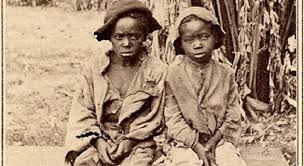
Anna Haverly is a thirteen year old girl from Mancos, Colorado.  Although just a young teenager, she has been published, and is even the author of the featured story of the month, in Stone Soup, a magazine with illustrations and stories written by children.  Since she’s a kid, she’s not very credible.  However, in her story, Curtis Freedom, she makes sure to include factual evidence to support the plot, making her have some credibility.  Up until slavery was abolished in 1865 due to the Thirteenth Amendment, it was common in America, and Harriet Tubman was an escaped slave who managed to free other slaves, just as she does for Curtis in the story.  Curtis is a twelve year old boy who’s a slave that dreams of freedom.  He was separated from his parents and hopes to be with them again, especially his father.  He travels with Tubman to Canada, where he finally reunites with his father and his freedom that he wanted for so long is granted.  By portraying Curtis’ journey, Haverly’s purpose is clearly to entertain her audience, a general one of all ages, with a story about hope, freedom, and a young boy’s search for his father.  In order to achieve her purpose of entertaining readers, which she does accomplish, Haverly appeals to pathos, uses a comparison, uses a second person point-of-view, and uses dialogue.  Haverly makes the audience feel bad for Curtis by portraying him as a slave who is subject to harsh treatment and has been separated from his family.  The hope that he has to be free and find his family gets transferred to the readers as they start to wish the same for him.  Haverly also includes a comparison of Harriet Tubman to Moses because they both freed slaves.  This comparison made a lot of sense and is very intriguing.  The second person point-of-view helps Haverly entertain the audience because it makes it possible to show the movements of all of the involved and not just have Curtis’ thoughts.  By using those rhetorical devices, Haverly writes a story entertaining to all readers.  


African American Child Slaves


Sunday, September 22, 2013

TOW #2: Dance Dance Revolution Disney Mix by Konami


Dance Dance Revolution is a virtual dancing game that was first released by Konami, a Japanese company known for releasing many animes and video games, such as Yu-Gi-Oh!, on November 21, 1998.  Since its first release, Dance Dance Revolution has been installed in numerous arcades across the globe.  It is at those arcades that young kids saw older adolescents playing the game and wanted to join in.  However, Dance Dance Revolution games are generally geared toward older adolescents and teens.  The ratings on the majority of the games says that the games are for everyone ten years of age or older.  The reason for that being the suggestive clothing of the characters and suggestive song lyrics.  Therefore, those young kids looking at the game in awe were usually not allowed to play or purchase the games by their parents.  That is why Konami started to make other editions of the game, such as the Mario version and this one, the Disney edition; to have younger players and to make more of a profit.  By using the Disney characters, Konami appeals to both ethos and logos.  Although the younger kids may have already wanted to play Dance Dance Revolution, Konami understands that they will most likely enjoy it more by being able to compete with characters that they are familiar with.  However, the Disney group is also dressed up in a way that would normally appeal to the older demographic, but it entices the younger demographic to the game even more because it makes them feel older.  Also, by using family friendly characters that parents know, love, and trust instead of more vulgar characters, they have no reason to forbid their young children from playing the game.  As a result of creating the Disney version of Dance Dance Revolution, Konami has managed to reach its audience, the parents of young child gamers, and has effortlessly convinced them to buy their product.  Therefore, the purpose of Konami to get younger children to play Dance Dance Revolution was achieved.  

Sunday, September 15, 2013

TOW #1: Guns made for kids: How young is too young to shoot? by Matthew DeLuca, Staff Writer, NBC News

Matthew DeLuca is a credible author because he is writing for NBC, a news agency  whose purpose is to inform the public news happening in the United States.  Besides Guns made for kids: How young is too young to shoot?, DeLuca has written numerous articles for NBC.  In Guns made for kids: How young is too young to shoot?, DeLuca’s purpose is to have the audience answer his title question about how old they believe people, more specifically kids, should be before they are allowed to use guns.  On Tuesday, April 30, 2013, a five year-old boy in Kentucky shot his two year-old sister accidentally with the use of a gun that was a present to him.  Currently, there are many children under the age of 18, including that boy, that use guns, and there are many laws on the topic of children gun usage.  Anyway, the author was able to accomplish his purpose by sharing different perspectives about the issue from numerous sources so the audience could compare and contrast their points of views and by discussing the laws surrounding the subject.  For example, DeLuca included Josh Sugarmann’s, executive director of the Violence Policy Center, quote, “There’s a recognition that the majority of the American public has concerns about putting guns in the hands of children.”  Later, DeLuca would include quotes from Andy Fink, editor-in-chief of a magazine called Junior Shooters that focuses on the benefits of kids using guns.  The people and their points not only are used for comparison but contradict each other well, as do other quotes in the article.  DeLuca appeals to authority by using quotes from well-known and knowledgeable people related to children gun usage as well as discussing laws, he appeals to emotions by sharing the story of an innocent 2 year-old girl being shot, and he appeals to logic by using data to support different points-of-views on the topic, such as a survey conducted by Hunting Heritage Trust and the National Shooting Sports Foundation in January 2012.  DeLuca is unbiased so the audience can make a choice for themselves, which they do.  

Children Using Guns for Takeover?